
Hard Water and Your New Shower: Tile, Grout and Glass That Stay Clean in the West Valley
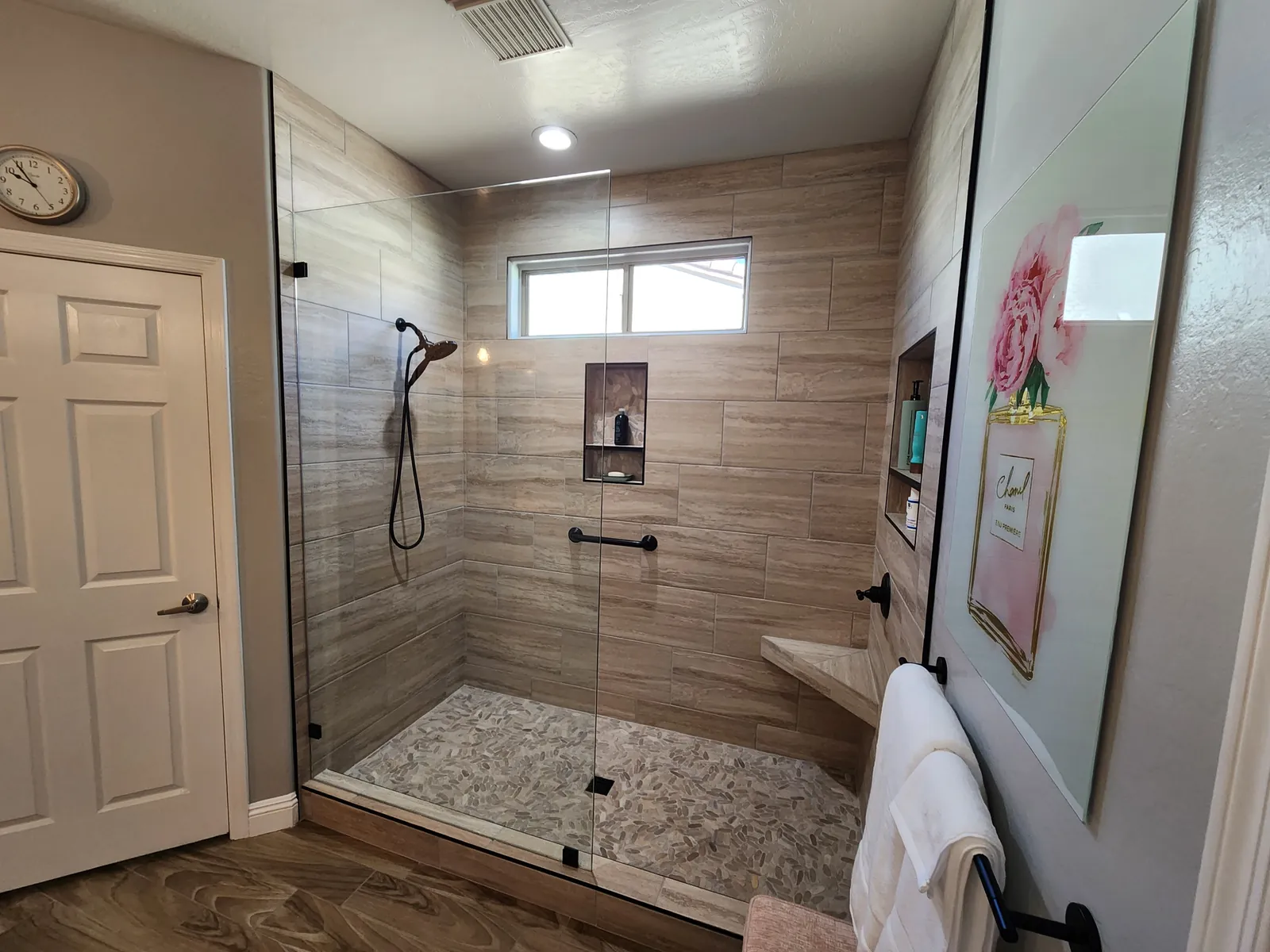
Short answer: Arizona's hard water leaves mineral spots on glass and buildup in grout, but you can plan around it. Porcelain tile, fewer and narrower grout joints, a grout that resists staining, treated or well-maintained glass, and a quick wipe-down habit make the biggest difference.
If you live in Surprise, Peoria, Sun City, Goodyear or anywhere else in the West Valley, you have probably seen the white film on a shower door that comes back a day after you clean it. That is hard water: water carrying a high level of dissolved minerals, mostly calcium and magnesium. When a shower dries, the water evaporates and the minerals stay behind. Over time that becomes cloudy glass, scale on fixtures, and grout that looks dull or discolored.
Hard water is not a reason to skip a new shower. It is a reason to choose materials with it in mind, and the best time to do that is before the tile goes up.
What Hard Water Does to a Shower
Minerals show up in three places first. On glass, they appear as spots and haze. On fixtures, they build up as scale around the showerhead and drain. In grout, they combine with soap and body oils to leave film and discoloration, because grout is more porous than tile. Each of these is easier to manage if the original materials were chosen to resist it.
Tile: Porcelain, Finish and Size
Porcelain is a practical choice. It is dense and water-resistant, so it does not absorb minerals and soap the way softer materials can. Natural stone such as marble or limestone can be beautiful, but it is sensitive to acidic cleaners and needs regular sealing, which makes it a higher-maintenance choice in a hard water shower.
Finish matters more than most people expect. Dark, glossy surfaces show mineral spots the most. Lighter tones and matte or lightly textured finishes tend to hide them. Very heavy texture, on the other hand, can be harder to wipe clean, so look for a middle ground and bring a sample home to check it in your own bathroom light.
Larger tiles mean fewer grout lines. Every grout joint is a place for buildup to settle. Larger wall tiles reduce the number of joints you will clean for years to come. On the shower floor, smaller mosaic tiles are still worth it because the extra joints give better grip underfoot.
Grout: Joint Width, Type and Sealing
Grout is where hard water does the most visible damage. A few things help:
- Narrower joints on wall tile mean less grout surface to maintain, when the tile and layout allow it.
- Grout type. Standard cement-based grout is porous and should be sealed. Epoxy and other stain-resistant grouts are designed to absorb less. Ask your installer which options suit your tile and how each one is maintained.
- Sealing. If your grout needs sealing, it is not a one-time job. Ask how often to reseal.
Glass: Frameless, Framed and Treatments
Frameless glass is popular in walk-in showers because it keeps the space open and shows off the tile. It also shows spots clearly, since there is no frame to break up the view. Whatever style you choose, ask about protective glass treatments that help water bead and run off, and about how they are cared for. Even the best treatment works better with a quick squeegee after the last shower of the day.
Fixtures and Finishes
Scale builds up around showerheads and valve trim in hard water areas. Finishes vary in how much spotting they show, so look at samples in the showroom rather than choosing from a photo, and plan to descale the showerhead occasionally. Matching your plumbing trim, cabinet hardware and glass hardware keeps the finished bathroom looking cohesive.
Daily Habits and Safe Cleaning
- Squeegee the glass and wipe the walls after showering when you can. It takes under a minute and prevents most buildup.
- Run the exhaust fan so the shower dries faster.
- Avoid acidic cleaners, including vinegar, on natural stone, and use them cautiously on grout, because acid can wear grout down over time.
- Use a cleaner made for your specific tile and grout, and check the manufacturer's instructions.
Water Treatment Is a Separate Decision
A whole-home water softener or filter reduces hardness at the source, and some homeowners add one alongside a bathroom remodel. That is a plumbing and water treatment decision made with a specialist, and it is separate from your tile, grout and glass choices. Choosing materials that handle hard water well is worthwhile either way.
What to Ask at Your Estimate
- Which tile finishes show the least spotting in my lighting?
- How many grout joints will the layout have, and which grout do you recommend?
- What glass treatment options are there, and how do I care for them?
- How should I clean this particular tile and grout?
Planning a Shower in the West Valley?
Henley's Floor & Home Pros is a family-owned, KB-1 licensed team with over 30 years in the West Valley. We plan plumbing, waterproofing, tile, glass, cabinetry and flooring together, and you choose materials at our Surprise showroom. Learn more about our walk-in shower installation and bathroom remodeling, or see our tile shower design ideas.
Thinking about a new shower? Call (623) 337-4200 or request a free in-home estimate.